


President grants chairmen authority to sell land and oversee the "group of seven"
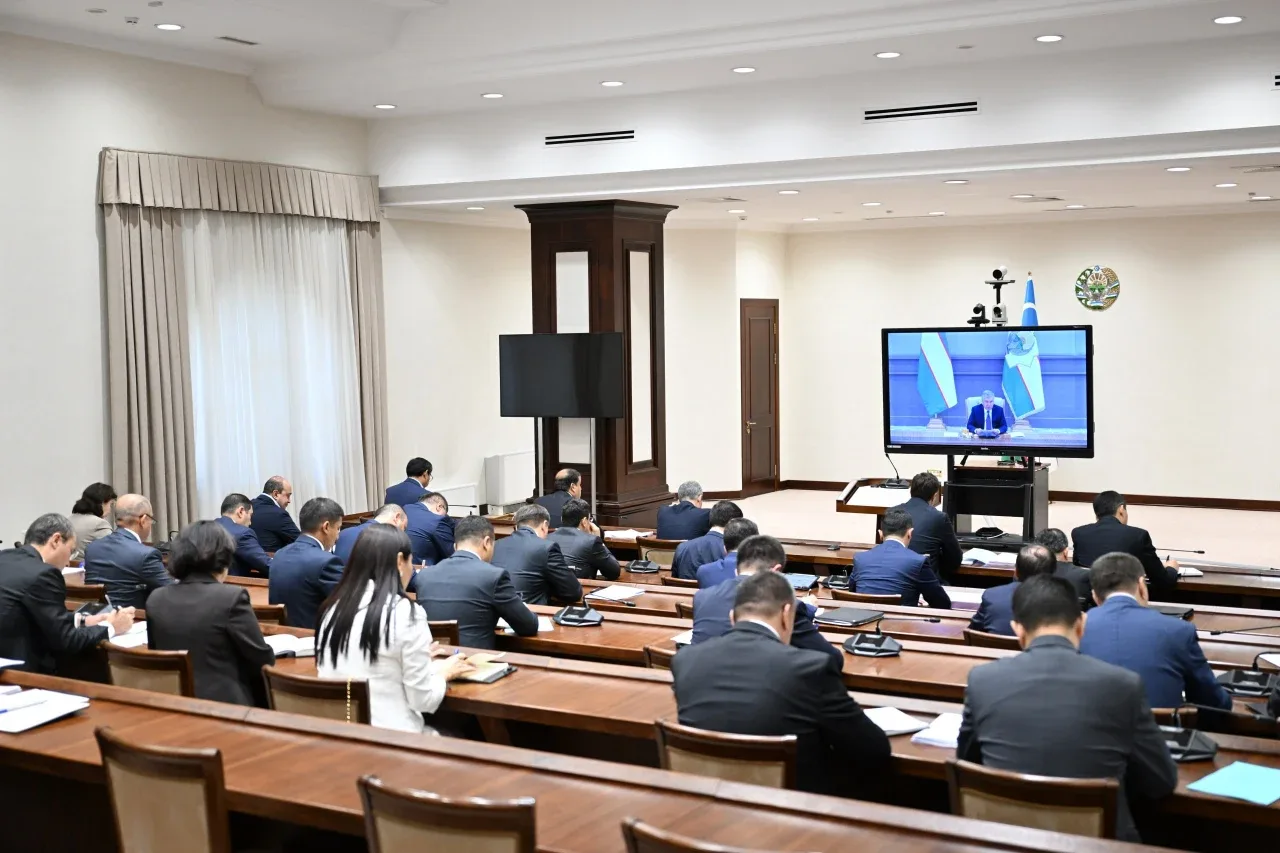
At a video conference chaired by President Shavkat Mirziyoyev on July 16, historic reforms were announced that will fundamentally change the Uzbekistan mahalla management system. From now on, the mahalla chairman will no longer be just a public representative, but a full-fledged and genuine administrator of their territory.
Zamin.uz presents the details of the unprecedented new powers granted to mahalla chairmen by the head of state and the new algorithm for working at the mahalla level.
"The mahalla is the management link closest to the people. People's daily issues should be resolved right there, without unnecessary bureaucracy," said Shavkat Mirziyoyev.
New powers of mahalla chairmen: Comparison of old and new systems
At the meeting, mahalla chairmen were granted significant rights to solve social problems and develop entrepreneurship:
New opportunities | How it was before? | How it will be now? |
Putting vacant land up for auction | Controlled by hokimiyats and higher authorities, with the process taking months. | The chairman can directly put vacant land in the mahalla area up for auction for the construction of private kindergartens, schools, clinics, and sports facilities. |
Control over the "Mahalla Seven" | Members of the "seven" worked in a fragmented manner, reporting mainly to their higher authorities. | The chairman approves the work plans of the assistant to the hokim, the prevention inspector, the women's activist, the youth leader, the tax officer, the banker, and the social worker, and strictly demands their implementation. |
Financing projects | Requests for funds for small projects in mahallas were made to higher organizations. | The "Mahalla Seven" will be granted 10 million soums for projects that serve to improve cleanliness, prosperity, and income generation. |
The "Yangi Quva" mahalla experience: A concrete system against unemployment
The head of state demonstrated a new working style for ensuring population employment and effective use of household plots, using the example of the "Yangi Quva" mahalla in the Fergana region.
There are 51 unemployed citizens in this mahalla, 4 of whom have graduated from an agricultural technical school and have 10 sotiks of land at home. According to the new system, reducing unemployment will be resolved based on the following chain:
Placing an order: The mahalla chairman places a specific order with the mahalla banker to build a lightweight greenhouse specialized for growing flower seedlings on the household plot.
Identifying needs: For the remaining unemployed population, the chairman determines who needs a loan, equipment, or land, and who wants to start a business, and assigns tasks to the banker.
Solving social problems: For example, because there is no kindergarten in "Yangi Quva," 50 children commute to a neighboring mahalla. The mahalla chairman puts 70 sotiks of vacant land in the area directly up for auction to build a private kindergarten.
A 240 billion soum fund and a scientific approach
To support social and environmental projects in mahallas, a grant of 10 million soums will be allocated to each of the 8,992 mahallas in the republic. A total resource of 240 billion soums is being formed by the state for these purposes.
Furthermore, to introduce a scientific approach to the mahalla-based work system and systematically improve the qualifications of the "Mahalla Seven" members, a new structure — the National Institute for Mahalla Development — will be established. This institute will focus on developing scientific solutions for urgent problems in mahallas.



Comments 0
…