


Robots begging for alms appear on the streets of China
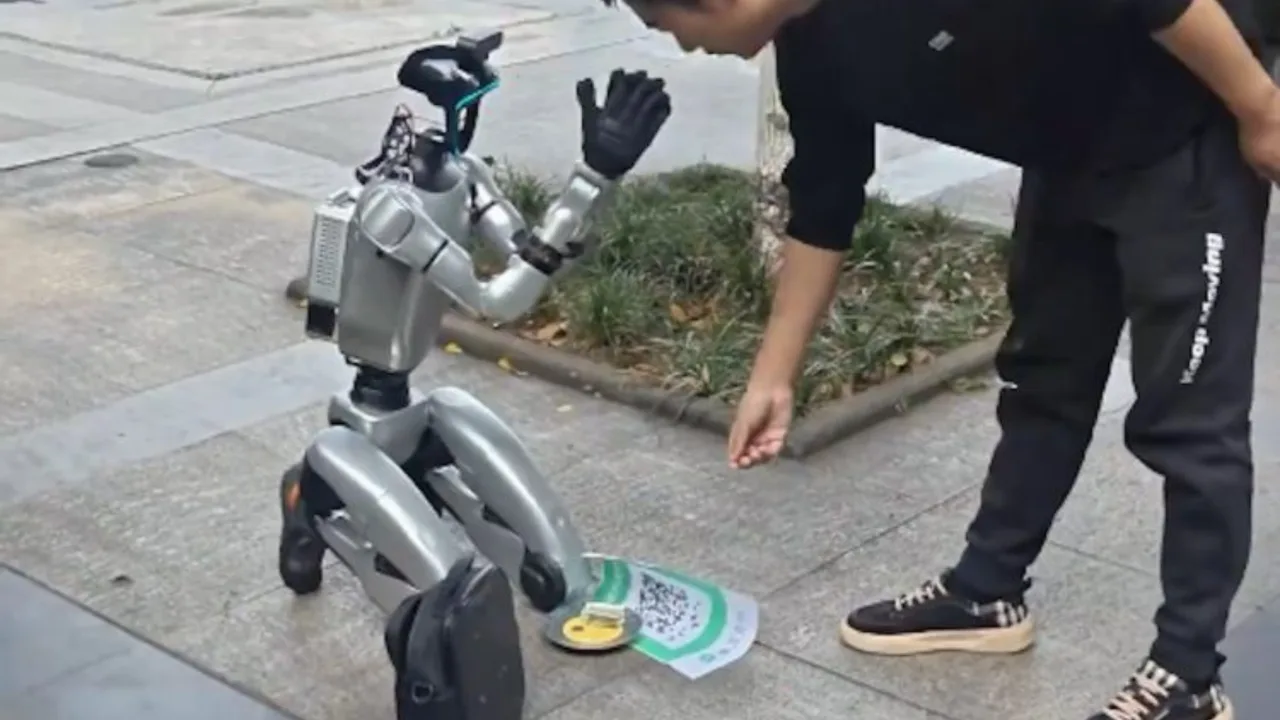
Humanoid robots begging for alms have appeared on the streets of several Chinese cities. Signs with inscriptions such as "Please pay my electricity bill" and QR codes for online money transfers have been placed in front of them. These unusual sights have raised the question of whether, in the era of the artificial intelligence revolution, even street begging could become an activity performed by robots.
Recently, much has been said about how AI-based programs and robots could take over human jobs. But who would have thought that these technologies could even replace humans who beg on the streets?
According to reports from several media outlets, humanoid robots have recently started engaging in begging as well. This shows that they are infiltrating an area traditionally occupied by humans for a long time.
Robots appear on the streets of Beijing, Chengdu, and Fuzhou
The Hong Kong-based news website HK01 recently reported that humanoid robots begging for alms were spotted in several Chinese cities. Specifically, such robots were observed on the streets of Beijing, Chengdu, and Fuzhou.
The appearance of robots in multiple cities implies that this situation is not accidental or an isolated incident, but rather a preliminary sign of a new trend.
The individuals who placed them on the streets also paid special attention to the posture and appearance of the robots. While some robots were sitting with bowed heads and kneeling, others were seen squatting in front of their "human masters".
Various signs designed to attract people's attention were placed next to them. For instance, help was requested through phrases like "I have no money to charge my phone" and "Please pay my electricity bill." QR codes enabling online money transfers were also provided.
Photos of the robots caused a stir on the internet
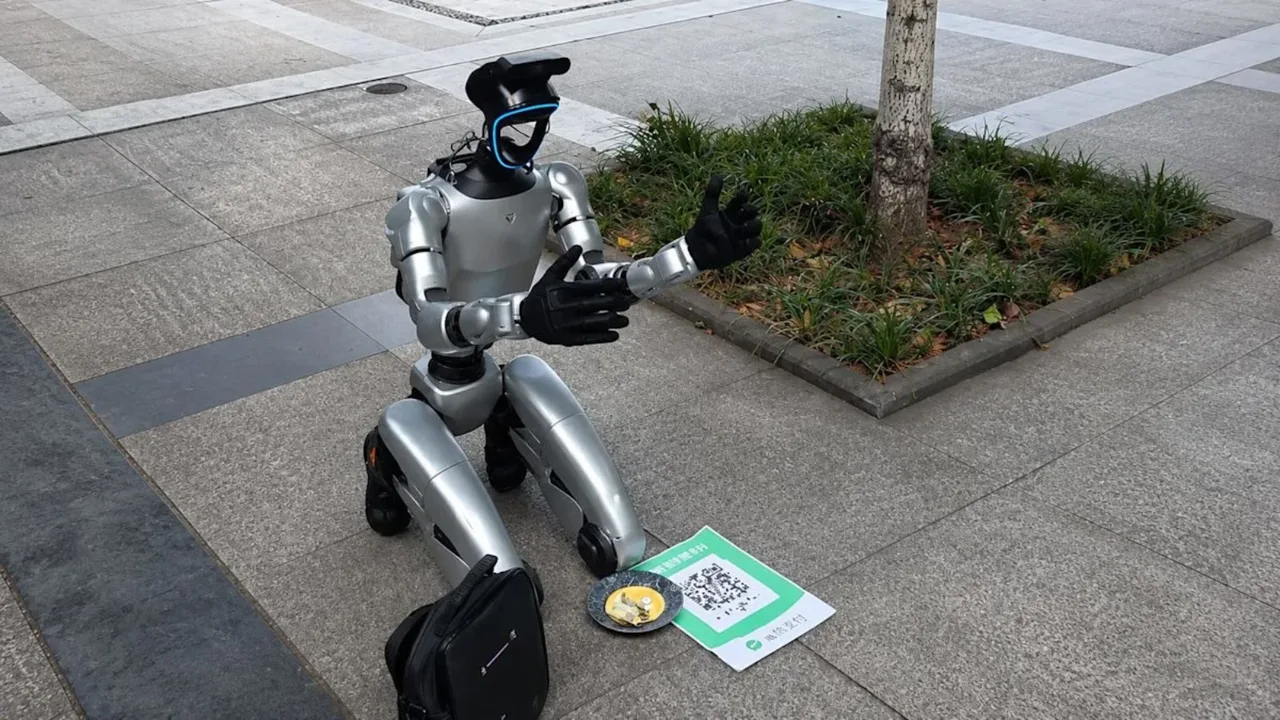
Photographs of the begging robots quickly spread across the Chinese internet segment this week, sparking widespread discussions. Users were divided into two opposing opinions.
One group of people expressed concern that artificial intelligence is infiltrating almost all spheres of human life. In their view, as a result of technological development, humans may have to compete with robots even in activities previously thought to be exclusively human.
Others looked at this trend with skepticism. They raised the question of whether the robots were actually brought to the streets to beg or if this was simply a staged stunt aimed at catching people's attention.
Thus, a few seemingly ordinary photos sparked heated debates about the role of artificial intelligence in society, its capabilities, and its relationship with humans.
Does it make sense to use expensive robots for begging?
Today, the most advanced humanoid robots available on the market include the G1 and H2 models by Unitree. However, such robots are not cheap. Therefore, using them on the streets for the purpose of begging does not seem very logical from a financial standpoint.
Considering the funds spent on purchasing and operating a robot, making an economic profit from such an activity can be difficult. But if the main goal behind this is to attract people's attention rather than collect money, the situation takes on a completely different turn.
Some have also speculated that these unusual sights might be part of an art project. In their opinion, such installations created using robots could be intended to prompt people to think about the increasingly complex relationship between artificial intelligence and robots.
After all, when technology created by humans begins to mimic human-like actions, it raises many questions not only about technical progress but also about the future of society.
For now, the true purpose of the begging robots appearing on the streets of China is not entirely clear. They could be part of a real social experiment, an art project, or simply a stunt organized to create a stir on the internet. However, this phenomenon shows that debates regarding the role of artificial intelligence in human life will continue for a long time.


Comments 0
…