


The truth revealed regarding the sensational video involving Marco Rubio in Samarkand (video)
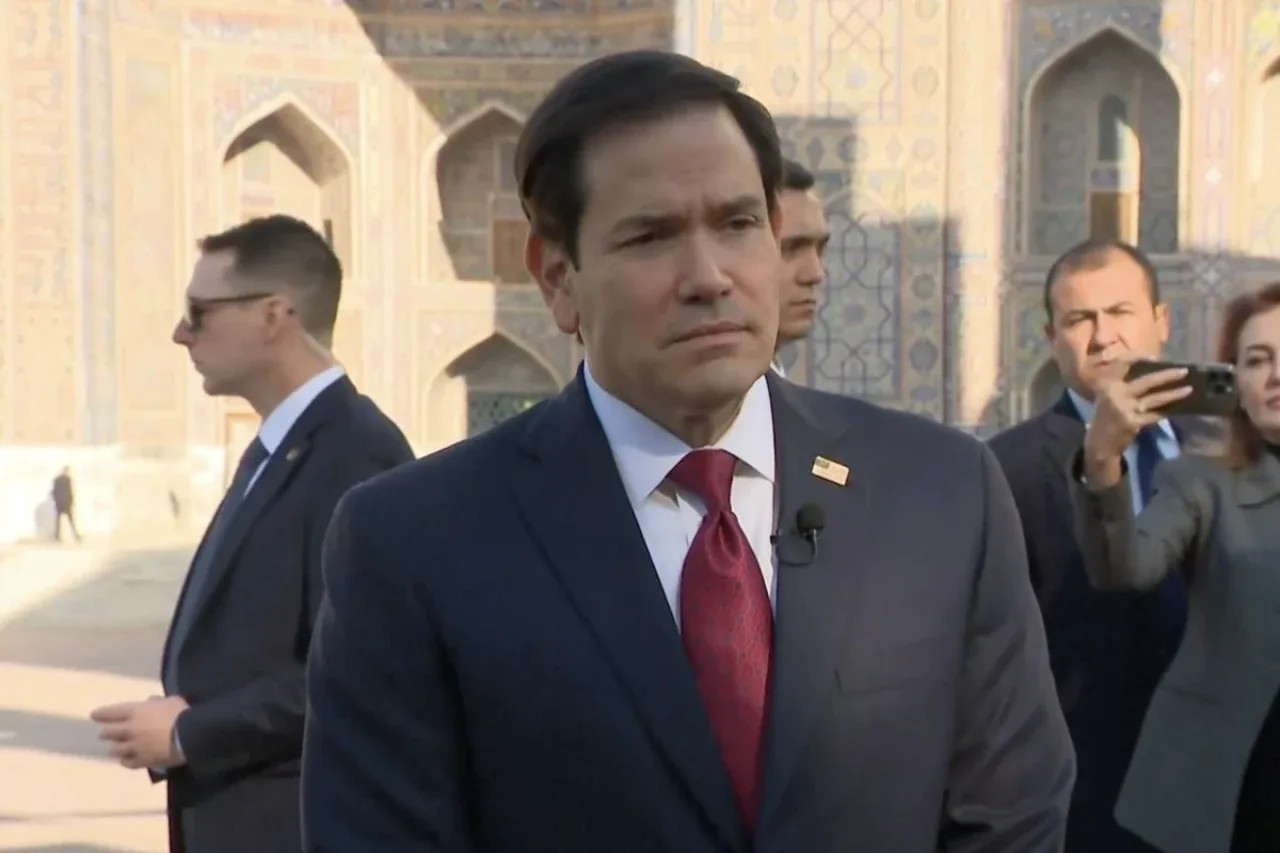
A short video clip from the interaction between US Secretary of State Marco Rubio and media representatives at the historic Registan Square in Samarkand during his visit to Uzbekistan sparked widespread discussions and misunderstandings on social media.
False interpretations spread among network users claiming that a local Uzbek journalist had allegedly addressed the US Secretary of State in Russian. However, upon examining the full context and the actual situation, it became clear that the reality was completely different.
Who was the person that asked the question, and what language did they use in their address?
The important facts regarding the video that caused the discussion are as follows:
Identity of the journalist: The person who asked the question was not a representative of local mass media, but rather Eric Martin, a correspondent for the influential international news agency Bloomberg who accompanied the US delegation;
Language of communication: Eric Martin addressed Secretary of State Marco Rubio in his native language, English; the question was not asked in Russian.
How did the conversation between Rubio and the journalist about language unfold?
The language issue was brought to the agenda due to the American journalist's perception of the linguistic situation in Uzbekistan:
Question about the local language: After answering the question, Marco Rubio asked correspondent Eric Martin whether he knew the local language of Uzbekistan;
The journalist's confusion: Assuming the local language was Russian, the Bloomberg correspondent stated that he knew «a little, broken Russian»;
The Secretary of State's explanation: At that point, Marco Rubio clarified the situation, adding that the main and local language of the country is the Uzbek language, though while Russian is not a state language here, a certain portion of the population understands it.
The clip taken out of context and incorrect conclusions on the network
Because precisely this short dialogue was taken out of context and distributed on the networks, many users perceived the interlocutor as a local media representative and engaged in unjustified criticism.
In reality, the conversation took place in English between a foreign diplomat and a foreign correspondent, during which the status of the Uzbek language was correctly acknowledged.



Comments 0
…